You’ve bought the tank.
You’ve chosen the fish.
You’ve probably spent far too long deciding whether that one piece of driftwood looks better slightly to the left.
Surely the expensive part is over?
Not quite.
The upfront cost of an aquarium is only part of what fishkeeping costs over time. There’s electricity, food, water treatments, testing, filter media and the occasional piece of equipment that eventually needs replacing.
None of that means aquariums have to become an expensive hobby. In fact, a lot of the ongoing cost comes down to how your tank is set up and how well you look after it.
So, what does it actually cost to keep an aquarium running – and where can you save money without cutting corners?
What are the hidden costs of owning a fish tank?
The main ongoing aquarium costs generally include:
- electricity
- fish food
- water conditioner and treatments
- water testing
- filter media
- replacement equipment and parts
- maintenance supplies
- livestock and plants
The amount you spend depends hugely on your setup.
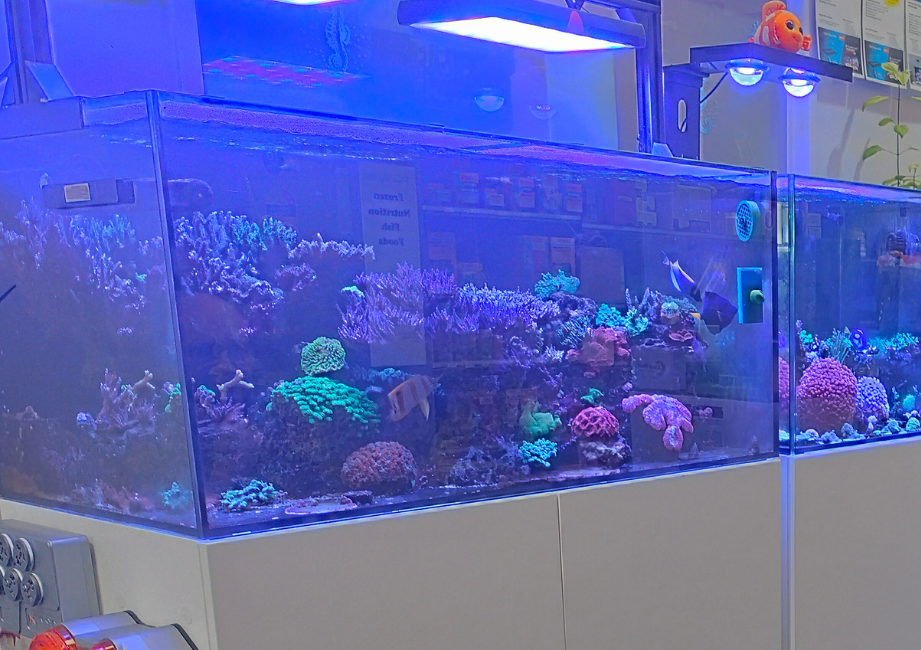
A small freshwater aquarium with basic filtration is very different from a large planted tank or marine reef system running pumps, heaters, specialist lighting and additional equipment.
That’s why there isn’t one useful answer to “How much does an aquarium cost to run?”
But there are definitely areas worth thinking about.
How much electricity does an aquarium use?
Electricity is probably one of the easiest ongoing aquarium costs to forget about.
Your filter or pump may run 24 hours a day. Tropical aquariums normally require heating, and aquarium lighting runs for part of each day. More advanced setups may also include wavemakers, skimmers, dosing equipment, CO₂ systems or other controllers.
Aquarium heaters use thermostats, which means they switch on and off as required rather than continuously drawing their full rated wattage. How much power a heater actually uses will depend on factors such as tank size, heater wattage, desired water temperature and the temperature of the room.
How can you reduce aquarium electricity costs?
Start by making sure the equipment actually suits the aquarium.
Buying an oversized piece of equipment simply because “bigger must be better” doesn’t always make sense, while undersized equipment may struggle to do its job properly.
Lighting is another easy place to become more deliberate.
Most aquariums do not need their lights running from the moment someone wakes up until the last person goes to bed. Keeping your aquarium on a consistent lighting schedule is also better for controlling unwanted algae than leaving lights running unnecessarily.
A programmable timer means you aren’t relying on someone remembering to switch the lights off every night.
Want to automate your aquarium lighting?
AquaRays’ 3-in-1 Programmable Timer has three individually controlled sockets that can be used with compatible aquarium lights, CO₂ equipment, oxygen systems or pumps.
Shop aquarium controllers and timers
Fish food: small container, surprisingly easy to waste
Fish food probably doesn’t look like one of the big aquarium expenses.
Until half of it is disappearing into the gravel.
Overfeeding costs you twice: you use food faster, and uneaten food can contribute to poorer water quality as it breaks down.
The amount your fish need depends on their species, size and number. The RSPCA recommends feeding only an amount the fish can consume within a few minutes and specifically warns against overfeeding.
So the budget-friendly solution is not buying the cheapest food you can find.
It’s feeding an appropriate food in an appropriate amount.
Your fish don’t need an all-you-can-eat buffet.
Browse fish food and feeding equipment
Water changes cost more than just water
Regular aquarium maintenance normally involves replacing part of the tank water.
For freshwater tanks using tap water, you may also need a water conditioner because chlorine in tap water can harm fish and beneficial bacteria.
That makes water conditioner another small but ongoing expense.
The good news is that many aquarium conditioners are concentrated, so measuring the correct amount matters.
Using twice as much because it “looks about right” doesn’t make the water twice as conditioned. It just means the bottle disappears twice as quickly.
AquaRays carries water treatments including API Tap Water Conditioner and API Aqua Essential for making tap water suitable for aquarium use.
Need water treatment for your next water change?
Browse AquaRays water treatment products
Do you really need aquarium water testing?
Yes.
And while test kits are another cost, they are one of those purchases that can help identify a problem before it becomes a much more expensive one.
Clear water does not automatically mean healthy water.
Ammonia, nitrite, nitrate, pH and other parameters cannot reliably be judged just by looking at the aquarium. Water testing helps you understand what is actually happening inside the tank.
AquaRays currently stocks a wide range of aquarium testing products, including ammonia, nitrite, nitrate, pH and multi-parameter test kits.
Replacing fish because something went wrong with the water is generally a much worse way to discover there was a problem.
Check the water before the fish have to tell you something is wrong.
Shop aquarium water testing kits
Filter media and replacement parts add up too
Filters need maintenance.
Depending on the filter, that can involve sponges, filter wool, filter socks, cartridges, carbon or other specialist media.
But one of the most common mistakes is assuming every piece of filter media needs to be thrown away simply because it looks dirty.
Biological filter media provides a home for beneficial bacteria involved in processing fish waste, so you need to understand what each piece of media does before replacing it. Filter sponges and reusable components may often be cleaned appropriately rather than automatically discarded.
AquaRays carries reusable and replaceable filtration products ranging from filter wool and biological media through to filter socks and specialist media.
The budget-friendly approach is simple:
Replace what actually needs replacing. Maintain what can be maintained.
Cheap aquarium equipment can become expensive equipment
It is tempting to look only at the price tag when choosing a heater, filter, pump or light.
But the cheapest option isn’t necessarily the cheapest option long-term.
Equipment that is poorly matched to the aquarium may not perform properly, while replacing something twice because the first option wasn’t suitable tends to remove most of the original saving.
This is where planning the tank before buying equipment really matters.
Your aquarium size, livestock, temperature requirements, plants and type of setup should determine what equipment you actually need.
AquaRays’ own setup guidance recommends starting with the fundamentals: appropriate filtration, heating where required and lighting suited to the aquarium.
Setting up a new tank and not sure what you actually need?
Browse the AquaRays aquarium range
How can you make an aquarium more budget-friendly?
The biggest savings usually don’t come from finding the cheapest bottle of conditioner or waiting for fish food to go on sale.
They come from running the aquarium properly.
1. Buy equipment that matches your tank
Before purchasing a filter, heater or light, check the specifications and make sure it suits your aquarium.
Buying twice is rarely the budget option.
2. Put your lights on a timer
A timer keeps lighting consistent and prevents the aquarium lights being accidentally left on for hours longer than intended.
That can also help reduce one of fishkeeping’s favourite side jobs: cleaning algae.
3. Don’t overfeed
Feed what your fish actually need.
Less wasted food means the container lasts longer and less excess organic matter ends up in the aquarium.
4. Test your water
Water testing may feel like another expense, but it can help you identify changes before they become bigger problems.
5. Keep your filter maintained
A clogged filter has to work harder to move water and may not perform as intended.
Follow the manufacturer’s maintenance guidance, clean reusable components where appropriate and replace media when it genuinely needs replacing.
6. Don’t stock the tank on impulse
That fish might look small in the shop.
That doesn’t mean it stays small.
Before buying livestock, research its adult size, behaviour, temperature requirements, diet and tank requirements. The wrong fish can quickly turn into a bigger aquarium, another filter or a complete tank rethink.
7. Keep the setup simple if simple suits you
Not every aquarium needs CO₂ injection, automated dosing, multiple pumps or sophisticated controllers.
Some tanks genuinely require more equipment.
Others don’t.
Build the aquarium around what the fish and plants actually need rather than what happens to look impressive online.
Is owning an aquarium expensive?
It can be.
It can also be surprisingly manageable.
A small, thoughtfully planned freshwater aquarium and a large reef system are technically both “fish tanks”, but their running costs can be completely different.
The smartest way to keep aquarium costs under control is to think beyond the initial purchase.
Choose equipment suited to the tank. Feed properly. Test the water. Maintain what you already own. Automate where it genuinely makes sense.
And perhaps most importantly, don’t buy something simply because somebody on the internet said every aquarium needs one.
Sometimes the most budget-friendly aquarium product is the one you didn’t actually need to buy.
Want to make your aquarium setup work smarter?
Whether you need filtration, aquarium testing, food, water treatments, timers or replacement parts, AquaRays has a wide range of aquarium supplies for freshwater and marine setups.
Have a look at what your tank actually needs before adding to cart. Your fish – and your wallet – will probably appreciate it.
Shop AquaRays aquarium supplies
FAQ: Aquarium Costs in New Zealand
How much does it cost to run an aquarium in New Zealand?
There is no single figure because running costs depend on tank size, heater and pump wattage, lighting, equipment run times, your electricity tariff and the type of aquarium you keep. Larger or more equipment-heavy systems generally have more ongoing costs than simple setups.
What uses the most electricity in a fish tank?
It depends on the aquarium. Heaters, lighting, pumps and filters all use electricity. In heated aquariums, heater usage can vary significantly because thermostatic heaters cycle on and off depending on the water and room temperature.
Are fish tanks expensive to maintain?
They do have ongoing costs, including food, electricity, water treatments, testing and filtration supplies. Careful equipment choices and regular maintenance can help keep those costs manageable.
Can I reduce my aquarium electricity bill?
You may be able to reduce unnecessary electricity use by choosing appropriately sized equipment and putting compatible lighting and other non-continuous equipment on timers. Essential equipment such as filtration should not simply be switched off to save electricity.
What aquarium products should I budget for regularly?
Depending on your setup, ongoing purchases can include fish food, water conditioner, test-kit reagents or strips, filter media and maintenance supplies. Marine and heavily planted systems may require additional products.