Description
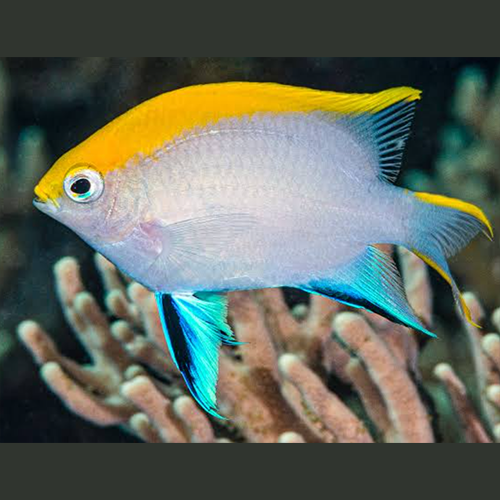
Bowtie Damselfish (Neoglyphidodon melas) Juvenile
Overview
Neoglyphidodon melas, commonly known as the Black Damselfish or Melas Damselfish, is a hardy and bold marine fish. While visually striking—often solid black or dark with a subtle bluish sheen—it is best suited for aquarists who are prepared to manage its territorial nature as it matures.
- Temperament: Territorial and aggressive, especially as it reaches adulthood.
- Size: Grows to approximately 10–12 cm.
- Hardiness: Very hardy; often considered a good option for intermediate keepers who want a bold, centerpiece fish.
- Note: Not recommended for tanks housing small, timid, or delicate species.
Care Requirements
- Tank size: 120+ litres for single adult; 220+ litres recommended for small community to reduce territorial conflicts.
- Temperature: 24–28°C
- Salinity/SG: 1.021–1.026
- pH: 8.1–8.4
- Alkalinity: 8–12 dKH
- Ammonia/Nitrite: 0 ppm; Nitrate < 20–40 ppm
- Substrate & decor: live rock with caves and ledges to establish territories; open swimming space
- Lighting: moderate (compatible with most reef lighting, but not demanding)
Maintenance
- Weekly or biweekly water changes (10–20%) per bioload.
- Stable parameters and good filtration/flow. Protein skimmer recommended.
- Monitor nitrate levels; damsels tolerate higher nitrate but overall tank health benefits from low nitrates.
- Arrange decor to create multiple visual barriers/territories to reduce aggression.
Diet
- Omnivore: accepts prepared and meaty foods.
- Staples: high-quality marine flakes/pellets, frozen mysis, brine shrimp, chopped seafood; occasional vegetable matter (spirulina, seaweed sheets).
- Feeding schedule: 1–2 times daily; offer varied diet for color and health.
- Juveniles may accept smaller live/frozen foods readily.
Behavior and Compatibility
- Temperament: territorial and aggressive, especially as they mature; will defend chosen rockwork.
- Social: usually kept singly unless in large tanks with many hiding spots; conspecifics often aggressive.
- Tankmates: compatible with semi-aggressive to robust species (larger wrasses, tangs, some gobies,
- larger clownfish). Avoid small, timid, or docile fish that will be bullied. May harass invertebrates and small shrimp; not reef-safe for sensitive SPS corals and delicate ornamental shrimp.
- Reef impact: can nip at corals and sessile invertebrates; caution in reef tanks.
Reproduction
- Spawning: forms pairs; male prepares/guards nest (often under rock/ledge). Eggs are demersal and attached to substrate; male fans and defends them until hatching.
- Breeding in captivity: achievable in home aquaria with a bonded pair and good conditions. Fry rearing requires live microfood (rotifers, newly hatched brine) and careful water-quality control.
Tips
- Aggression Management: If the fish begins to dominate the tank, try rearranging the rockwork to “reset” territorial boundaries.
- Quarantine: Always quarantine new fish to ensure they are healthy before introduction.
- Selection: Because they are a bold species, choose an active, alert individual at the store that is already accepting prepared foods.
Picture for illustrative purposes only. Either come in store to view available stock or request pictures to be sent to you.
Please Note: Due to variations within species resulting from age, region, sex, etc., the actual livestock may not look identical to the image. Approximate size range may also vary between individual specimens.