Description
Comet Goldfish (Carassius auratus)
Overview
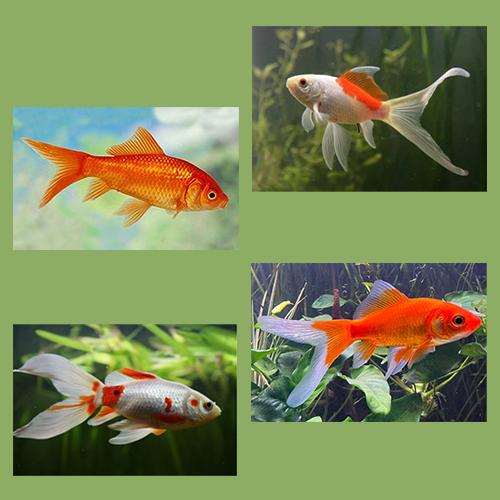
The Comet Goldfish (Carassius auratus) is one of the most popular and hardy varieties of fancy goldfish. Developed in the United States in the late 19th century from common goldfish, they are renowned for their streamlined bodies and long, flowing, deeply forked tails that resemble the tail of a comet.
- Appearance: Features an elongated, slender torpedo-shaped body with single anal and caudal fins. The most common color is bright metallic orange-red, but they also appear in white, yellow, or calico (shades of red, black, and blue over a white/orange base, often called Shubunkin-like traits), as well as striking red-and-white patterns (often referred to as “Sarasa” comets).
- Size: Can grow quite large, typically reaching 20 to 35 cm (8 to 14 inches) in length including their long tails.
- Lifespan: With proper care and adequate space, they are exceptionally long-lived, often surviving 10 to 15 years or more.
Care Requirements
- Aquarium & Pond Size: Unlike small tropical fish, Comets are active swimmers and massive biological waste producers. A single comet goldfish requires a minimum of 200 liters (approx. 50 gallons), with an extra 100 liters for each additional fish. Due to their large adult size and fast growth, they are ultimately best suited for outdoor garden ponds rather than indoor aquariums.
- Water Parameters:
- Temperature: 10°C to 23°C. They are a cold-water species and do not tolerate tropical temperatures long-term.
- pH: 7.0 to 8.0 (prefer neutral to slightly alkaline water)
- General Hardness (GH): 5 to 19°H
- Filtration & Flow: Heavy-duty filtration is non-negotiable. They produce a large amount of waste, so oversized canister filters or pond filters combined with regular maintenance are essential to keep ammonia and nitrite levels at zero.
Maintenance
- Aquascaping: Keep decor simple and robust. Comets are notorious diggers and love to root around in the substrate. Use smooth, large river gravel or bare-bottom setups to prevent accidental swallowing. Avoid sharp rocks or fragile decorations. Hardy plants like Anubias or Java Fern tied to driftwood work best, as soft-leaved plants will be eaten or uprooted.
- Water Quality & Changes: Perform frequent partial water changes (25% to 30% weekly) to control nitrates and organic buildup.
Diet
- Nature: Omnivorous and opportunistic surface feeders with a practically endless appetite.
- Staple Diet: High-quality sinking goldfish pellets or flakes (sinking pellets are preferred to prevent them from gulping surface air, which can lead to buoyancy/swim bladder issues).
- Vegetable Matter: They require a high-fiber diet. Supplement their dry food regularly with blanched vegetables (such as peas, zucchini, spinach, or shelled cucumber) and occasional treats of daphnia or brine shrimp.
Behaviour and Compatibility
- Temperament: Peaceful, highly active, and inquisitive. They spend most of their time cruising the water column or sifting through the substrate.
- Social Needs: They are social fish that prefer the company of their own kind. Keep them in groups of two or more, but ensure adequate space is provided to prevent competition during feeding.
- Tank Mates: Best kept with other fast-moving cold-water fish like Shubenkins or other single-tailed goldfish. Avoid housing them with fancy goldfish (such as Fantails, Orandas, or Ranchus) because Comets are much faster swimmers and will aggressively outcompete the slower, rounder varieties for food. Never keep them with tropical fish or tiny nano fish that could be viewed as a snack.
Breeding Behaviour
- Spawning Setup: Comets rarely spawn successfully in standard indoor tanks unless triggered by seasonal temperature changes. In outdoor ponds, spawning typically occurs in the spring as water temperatures rise into the 18°C to 20°C (64°F to 68°F) range. Provide dense clusters of fine-leaved plants or spawning mops.
- The Process: Males develop small white tubercles (breeding stars) on their gill covers and pectoral fins. They will enthusiastically chase and nudge females through the vegetation, prompting the female to scatter thousands of adhesive, clear eggs over the plants.
- Raising Fry: Adult goldfish will readily eat their own eggs and fry. If breeding in a controlled setting, remove the adults or the egg-laden plants immediately after spawning. The fry hatch in 4 to 7 days, hanging vertically on surfaces before becoming free-swimming, at which point they require infusoria or liquid fry food followed by newly hatched brine shrimp.
Picture for illustrative purposes only. Either come in store to view available stock or request pictures to be sent to you.
Please Note: Due to variations within species resulting from age, region, sex, etc., the actual livestock may not look identical to the image. Approximate size range may also vary between individual specimens.