Description
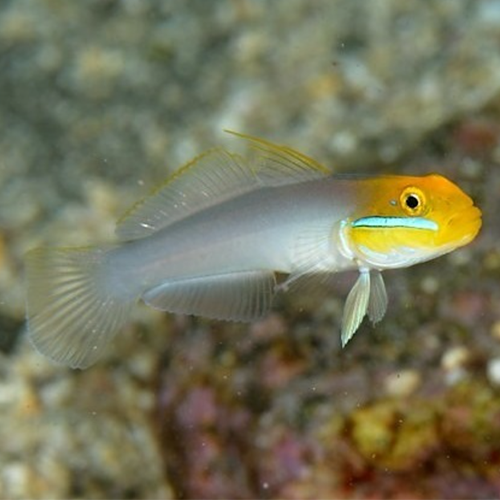
Golden-head Sleeper Goby (Valenciennea strigata)
Overview
The Valenciennea strigata, commonly known as the Blueband Goby or Gold Head Sleeper Goby, is a popular, peaceful, and highly functional addition to marine aquariums, prized for its striking appearance and natural sand-sifting behavior.
- Difficulty: Intermediate (due to specific dietary needs)
- Max Size: Up to 18 cm
- Temperament:
- Peaceful; territorial toward conspecifics (same species)
- Reef Safe: Yes
Care Requirements
- Tank Size: Minimum of 115–150 liters is recommended to ensure adequate foraging space.
- Substrate: A deep, fine sand bed (at least 4–5 cm) is essential. They sift sand through their gills to filter out organic material and small invertebrates. Avoid coarse or sharp gravel.
- Aquascaping: Provide plenty of live rock with tunnels and overhangs, as they are natural burrowers. Secure rockwork directly to the bottom glass before adding sand to prevent collapses when the fish digs.
- Water Parameters:
- Temperature: 24–26°C
- Salinity: 1.020–1.025 sg
- pH: 7.9–8.3
- Cover: Mandatory. They are notorious jumpers and will leap through any small opening if startled. Use a tight-fitting mesh lid.
Maintenance
- Monitoring: Keep a close watch on the fish’s body shape. If the belly appears pinched or concave, the goby is not receiving sufficient nutrition and requires more frequent feedings.
- Sand Bed Care: Avoid extremely fine “sugar” sand if you have high-flow powerheads, as it will remain suspended in the water column. Use a fine, but slightly heavier, aragonite sand for the best balance.
- Water Quality: Like all reef inhabitants, they are sensitive to poor water quality. Consistent maintenance ensures the microfauna they rely on remains healthy.
Diet
Diet is the most critical factor in their long-term survival. Many individuals slowly starve if they rely solely on what they find in the sand.
- Natural Diet: Small benthic invertebrates and microorganisms within the sand.
- Captive Feeding: You must supplement their diet with high-quality, protein-rich foods. Offer frozen mysis shrimp, brine shrimp, and finely chopped marine flesh at least 2–3 times daily.
- Feeding Technique: Use a pipette or turkey baster to target-feed near the goby’s burrow. Turning off flow pumps during feeding allows the food to settle on the sand, giving the goby a chance to consume it before faster mid-water fish outcompete them.
Behavior and Compatibility
- Compatibility: Excellent with most peaceful community fish. They generally ignore corals and invertebrates.
- Sand-Sifting: While they keep the sand bed clean and prevent “dead spots,” they can create “sandstorms” in the tank or bury low-lying coral frags.
- Conspecifics: They are typically aggressive toward their own kind. It is recommended to keep only one individual per tank unless you are introducing a bonded pair.
Reproduction
- Valenciennea strigata are monogamous in the wild.
- A pair will maintain a shared burrow together. The female typically spawns every 13–15 days, and the male guards the eggs in the burrow until they hatch.
- While they may spawn in large, mature aquariums, successfully raising the tiny larvae is extremely difficult and rarely achieved by home hobbyists.
Tips
- Check Before You Buy: When purchasing, observe the fish at the store. Ensure it is active, its stomach is not sunken, and it is actively sifting sand or showing interest in food. Avoid specimens that appear lethargic or emaciated.
- Acclimation: These fish can be sensitive to rapid changes in water chemistry; a slow drip-acclimation process is highly recommended.
- “Established” Tank: Only introduce this goby to a well-established aquarium (ideally 6+ months old) with a mature, healthy sand bed.
Picture for illustrative purposes only. Either come in store to view available stock or request pictures to be sent to you.
Please Note: Due to variations within species resulting from age, region, sex, etc., the actual livestock may not look identical to the image. Approximate size range may also vary between individual specimens.