Description
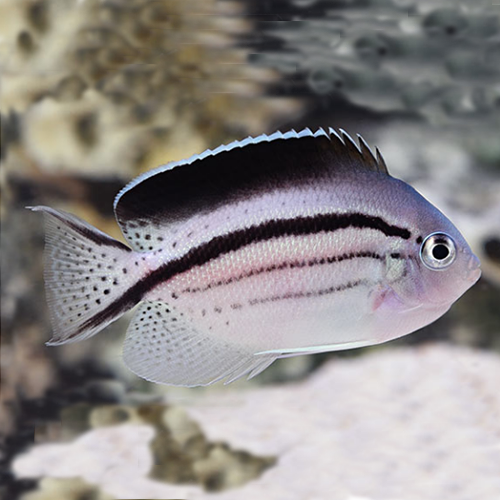
Lamarck’s Angelfish (Genicanthus lamarck)
Overview
The Lamarck’s Angelfish (Genicanthus lamarck), also known as the Black-Striped Angelfish, is one of the few species in the Pomacanthidae family that is considered genuinely reef-safe. They are prized for their elegant, elongated body shape and peaceful temperament.
- Temperament: Peaceful (one of the most docile angelfish)
- Reef Safe: Yes (generally does not nip at corals)
- Max Size: Approximately 18–23 cm
- Origin: Indo-West Pacific
Care Requirements
- Tank Size: A minimum of 400 litres is highly recommended. Because they are active, open-water swimmers, they need significant horizontal swimming space.
- Aquascape: They require a balance of open swimming areas and rockwork that offers plenty of hiding spots and caves for shelter.
- Water Parameters: Maintain stable, high-quality reef conditions:
- Temperature: 22–27°C
- Salinity: 1.023–1.025
- pH: 8.1–8.4
Maintenance
Maintenance: They are sensitive to poor water quality. Regular water changes and a high-efficiency protein skimmer are essential.
Diet
- They are primarily planktivores.
- Frequency: Feed small amounts 2–3 times daily.
- Foods: A varied diet is key to health. Provide frozen mysis shrimp, enriched brine shrimp, high-quality flakes, and small marine pellets. Adding vitamin-enriched foods will help maintain their colors.
Behavior and Compatibility
- Sexual Dimorphism: This species is easily sexed. Females are generally more slender with a distinct black horizontal stripe, while males have more prominent coloration and often have longer filaments on their tail fins.
- Social Dynamics: They are excellent in pairs or small harems (one male, several females). If keeping a group, ensure the tank is large enough to prevent territorial disputes.
- Compatibility: Highly compatible with most other peaceful to semi-aggressive fish. They are often bullied by larger, more aggressive tangs or other angelfish, so choose tank mates carefully.
Reproduction
Like other Genicanthus species, they are protogynous hermaphrodites. In a group, the dominant individual will transition into a male. While captive breeding is the “holy grail” for many reefers, successful reproduction in a home aquarium is extremely rare due to the complexity of larval rearing.
Tips
- Acclimation: They can be shy when first introduced to a new tank. Ensure they are eating well in a quarantine tank before adding them to your display.
- Avoid Aggression: Do not house them with aggressive or harassing tank mates, as this will cause them to hide and potentially stop feeding.
- Open Space: Do not overcrowd the upper water column with rockwork; they need that space to swim naturally.
Picture for illustrative purposes only. Either come in store to view available stock or request pictures to be sent to you.
Please Note: Due to variations within species resulting from age, region, sex, etc., the actual livestock may not look identical to the image. Approximate size range may also vary between individual specimens.