
Description
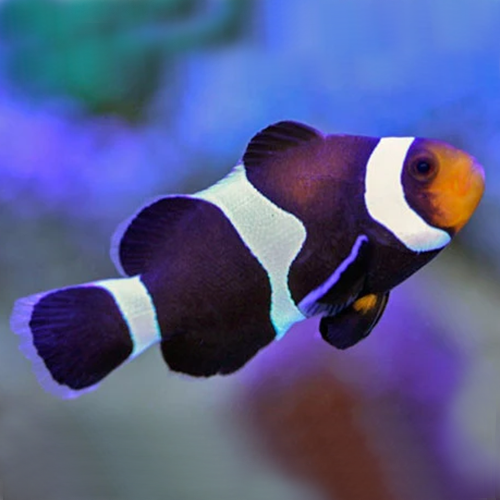
Black Ocellaris Clownfish or Orange Ocellaris Clownfish
Overview
The Ocellaris Clownfish (Amphiprion ocellaris), famously known as the “False Percula Clownfish,” is perhaps the most iconic marine aquarium fish. Due to their hardiness, captive-bred availability, and fascinating symbiotic relationships, they are the ideal choice for beginners and experts alike.
- Size: Typically grows to 8–10 cm.
- Lifespan: Often 10+ years in well-maintained home aquariums.
- Temperament: Generally peaceful, though they can become territorial toward other clownfish as they mature.
Care Requirements
- Tank Size: Minimum of 75 liters (20 gallons). While they don’t swim long distances, they need space to establish a territory.
- Environment: They do not strictly require an anemone to survive in captivity. If you choose to keep one, ensure your tank lighting and water quality are advanced enough to support the specific anemone species (such as Entacmaea quadricolor).
- Water Parameters:
- Temperature: 24–26°C
- Salinity: 1.020–1.025 SG
- pH: 8.1–8.4
Maintenance
- Water Changes: Perform a 10–20% water change every 1–2 weeks to keep nitrates low.
- Filtration: Standard biological/mechanical filtration with a protein skimmer is recommended for a stable reef environment.
Diet
Ocellaris Clowns are omnivorous and rarely picky.
- Food Types: A high-quality diet should include a mix of marine flakes/pellets, frozen mysis shrimp, brine shrimp, and occasional vegetable matter (like dried seaweed or spirulina).
- Feeding Schedule: Feed 1–2 times per day. Only provide what they can consume in 1–2 minutes to avoid water quality issues.
Behavior and Compatibility
- Social Dynamics: Keep them in pairs. If you keep more than two, ensure the tank is very large to prevent intense fighting, as they form strict hierarchies.
- Tank Mates: Excellent in community reefs. They generally get along with blennies, gobies, tangs, and smaller peaceful wrasses. Avoid aggressive fish like large triggerfish or groupers that might view them as food.
- Host Behavior: In the absence of an anemone, they will often “host” other corals, such as Toadstool Leathers, Frogspawn, or even powerheads.
Reproduction
Ocellaris Clownfish are one of the easiest marine fish to breed.
- Sexing: They are sequential hermaphrodites. The dominant fish will become female, while the submissive one remains male.
- Spawning: Pairs will often clean a flat rock surface near their host and lay eggs. In a community tank, the eggs are often eaten by other fish, so specialized breeding setups are required if you intend to raise the fry.
Tips
- Captive-Bred is Best: Always try to purchase captive-bred specimens. They are much hardier, more accustomed to aquarium foods, and free from the environmental impact of wild collection.
- Quarantine: While hardy, they are susceptible to Brooklynella (Clownfish Disease) and Marine Ich. Quarantining new additions is always the safest practice.
- Don’t Rush the Anemone: If you want an anemone, wait until your tank is at least 6–12 months old and very stable. Anemones are much more sensitive than the clownfish themselves
Picture for illustrative purposes only. Either come in store to view available stock or request pictures to be sent to you.
Please Note: Due to variations within species resulting from age, region, sex, etc., the actual livestock may not look identical to the image. Approximate size range may also vary between individual specimens.


