Description
Purple Tang (Zebrasoma xanthurus)
Overview
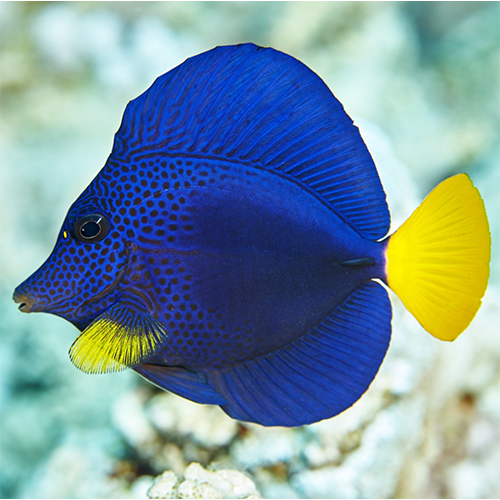
The Purple Tang (Zebrasoma xanthurus), also known as the Yellow-Tail Surgeonfish, is one of the most coveted and visually striking members of the surgeonfish family. Native to the Red Sea, it is prized for its deep, intense purple coloration contrasted by bright yellow pectoral fins.
- Appearance: Features a deep, royal purple body covered in small black dots, particularly around the face and head. The tail is often yellow, and the pectoral fins are a vibrant, contrasting yellow.
- Size: Reaches an adult size of approximately 22 cm.
- Temperament: Known for being one of the most aggressive members of the Zebrasoma genus. They are highly territorial, especially toward other tangs or fish with similar body shapes.
- Lifespan: Can live 10+ years with excellent care.
Care Requirements
- Tank Size: A minimum of 480 litres is strongly recommended. Because they are highly territorial and active swimmers, they require significant space to establish their own territory without constant conflict.
- Aquascaping: They appreciate ample live rock structures that provide clearly defined caves and boundaries. This helps reduce aggression by allowing them to establish “sight-line” breaks.
- Water Parameters:
- Temperature: 23–27°C.
- Salinity: 1.020–1.025 SG.
- pH: 8.1–8.4.
Maintenance
- Regular upkeep is crucial to prevent common issues like ich, bacterial infections, or head/lateral line erosion (HLLE), often linked to poor diet or water quality.
- Water Changes: 10-20% weekly using RO/DI water matched to tank parameters.
- Filtration: Protein skimmer, canister filter, or refugium recommended. Add activated carbon to remove toxins.
- Testing: Weekly checks for pH, salinity, ammonia, nitrite, nitrate, and phosphate. Use a refractometer for accuracy.
- Cleaning: Siphon detritus during changes; clean filters monthly. Monitor for algae overgrowth, as the tang helps control it but needs supplements.
- Quarantine: Always quarantine new fish for 4 weeks with medications like praziquantel for flukes.
Diet
- Primary Diet: Primarily herbivorous. They are voracious eaters of algae. You should provide nori (dried seaweed) on a clip daily to satisfy their constant grazing needs.
- Varied Nutrition: Supplement with high-quality herbivore pellets, frozen spirulina-based foods, and occasional meaty items (like mysis) to ensure a balanced diet.
- Maintenance: Their high activity level and appetite mean they produce significant biological waste. A robust protein skimmer and frequent water changes are essential to maintain high water quality and prevent algae blooms.
Behavior and Compatibility
- Aggression: As mentioned, they are notoriously territorial. They are often best kept as the “king of the tank” or added as the very last fish to an established system to minimize their aggression toward newer, smaller tank mates.
- Compatibility: Avoid keeping them with other Zebrasoma tangs (like Yellow or Scopas Tangs) unless the aquarium is extremely large (typically 800+ litres). They are generally fine with peaceful community fish that do not resemble them in shape or color.
- Reef Safety: Generally considered reef-safe. They are excellent for keeping rockwork clean, but they should be fed well to ensure they do not become interested in picking at coral tissue.
Reproduction
Breeding Purple Tangs in home aquariums is extremely rare and not recommended for hobbyists. They are broadcast spawners: In the wild, males court females with dances, and pairs release eggs and sperm into the water column near the surface. Larvae (pelagic phase) drift before settling on reefs.
Tips
- Quarantine: Like all surgeonfish, they are prone to Cryptocaryon (Marine Ich). Because they are often expensive and highly prized, a strict, proper quarantine procedure is essential before introducing them to your main display.
- Introducing New Tank Mates: If you must add new fish after a Purple Tang is established, use an acclimatization box to allow the existing fish to get used to the new arrival without physical contact.
- Health Indicators: A healthy Purple Tang should be plump (not pinched behind the head) and display deep, vibrant coloration. If the purple begins to look “faded” or grey, check your water quality and diet immediately.
Picture for illustrative purposes only. Either come in store to view available stock or request pictures to be sent to you.
Please Note: Due to variations within species resulting from age, region, sex, etc., the actual livestock may not look identical to the image. Approximate size range may also vary between individual specimens.