
Description
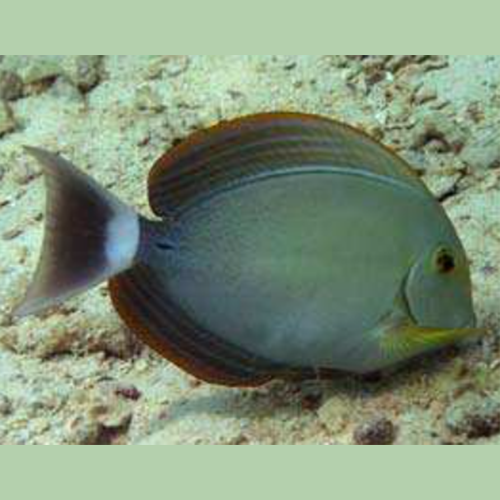
Yellowfin Tang (Acanthurus xanthopterus)
Overview
The Acanthurus xanthopterus, known as the Yellowfin Surgeonfish, is a large and powerful member of the Acanthuridae family. While it possesses an attractive, understated coloration, it is a demanding fish that requires specialized, massive aquatic environments.
- Temperament: Semi-aggressive; can become highly territorial, especially as it matures.
- Size: Grows very large, typically reaching 40–50 cm in the wild. In home aquariums, they will still outgrow almost all standard tank setups.
- Behavior: Highly active, constant swimmer. It requires an immense amount of swimming space to maintain its health and minimize aggression.
Care Requirements
- Tank Size: Due to its massive size and activity level, a minimum of 800–1000 litres is required for long-term health. This is a species generally better suited for public aquaria or advanced private custom systems.
- Environment: They require vast open swimming areas. Live rock should be arranged to provide structure and hiding spots at the periphery, but the majority of the tank must remain unobstructed to accommodate their size and swimming needs.
- Water Parameters:
- Temperature: 24–27°C.
- Salinity: 1.020–1.025 SG.
- pH: 8.1–8.4.
Maintenance
- Water Quality: Given their size and metabolism, they produce a significant bioload. High-capacity, industrial-grade filtration systems and massive protein skimming are non-negotiable.
- Routine: Very frequent, large water changes are required to keep nitrates and other pollutants under control.
- Equipment: Strong water flow is beneficial to help replicate their natural reef environment and support gas exchange.
Diet
- Type: Herbivore (grazing).
- Staples: Their diet should consist mainly of high-quality vegetable matter, including large quantities of nori (dried seaweed), spirulina-enriched pellets, and fresh macroalgae.
- Supplementation: While primarily herbivores, their size requires significant caloric intake; they will readily accept meaty foods, but these should not form the bulk of their diet.
Behavior and Compatibility
- Tankmates: Can be kept with other robust, large fish (such as groupers, large snappers, or other massive tangs in appropriately sized systems).
- Avoid: Do not house with small or timid fish that may be easily intimidated or injured. They will likely be aggressive toward other surgeonfish, especially those of similar body shape.
- Reef Safety: Generally considered reef-safe, though their sheer size and swimming patterns can dislodge or damage corals. They may graze on algae near corals, but they typically do not eat the coral tissue itself.
Reproduction
Reproduction has not been documented in a home aquarium setting. As broadcast spawners, they require vast ocean environments to complete their reproductive cycle.
Tips
- The Size Reality: This is not a fish for the average hobbyist. Its adult size is often underestimated, leading to stunted, stressed, and diseased fish in inadequate tanks.
- Parasite Susceptibility: Like all surgeonfish, they are prone to Cryptocaryon (Marine Ich). Maintaining excellent water quality and a stress-free environment is the best defense.
- Long-Term Planning: Only consider this species if you are prepared for the logistics of a massive aquarium and the significant maintenance required to support such a large animal.
Picture for illustrative purposes only. Either come in store to view available stock or request pictures to be sent to you.
Please Note: Due to variations within species resulting from age, region, sex, etc., the actual livestock may not look identical to the image. Approximate size range may also vary between individual specimens.