Description
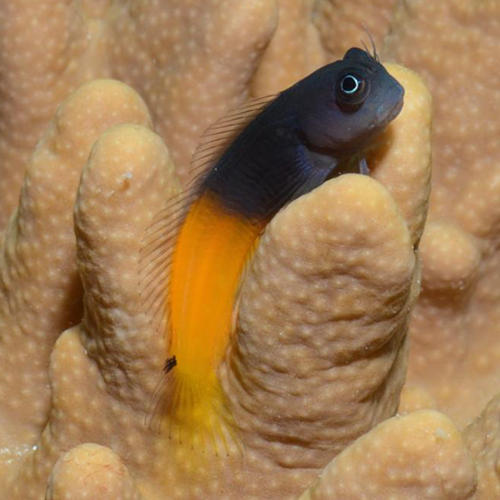
Bicolour Blenny (Ecsenius bicolor)
Overview
The Bicolour Blenny is a hardy, peaceful, reef-compatible combtooth blenny famous for its striking two-tone body and expressive, inquisitive personality. Growing to around 10–11 cm (4–4.5 inches), it spends most of its day perching on live rock and grazing on microalgae.
- Temperament: Generally peaceful with unrelated species, though territorial toward other blennies and similarly shaped bottom-dwellers.
- Reef Safe: Yes
- Max Size: Approximately 10–11 cm
- Origin: Indo-Pacific, including the Maldives, Indonesia, Fiji, Micronesia, and the Great Barrier Reef.
Care Requirements
- Tank Size: A minimum of 120 litres is recommended. They are active swimmers that spend much of their time in the water column, so they appreciate having space to move.
- The “Perch” Requirement: They are naturally adapted to living in the holes of reef structures. Provide plenty of live rock with various crevices, ledges, and specifically abandoned worm holes where they can back their bodies in and perch.
- Lid: Like almost all marine fish, a tight-fitting lid is essential to prevent jumping.
- Water Parameters:
- Temperature: 22–26°C
- Salinity: 1.023–1.025
- pH: 8.1–8.4
Maintenance
They are hardy fish that do not require specialized maintenance beyond standard reef aquarium care (regular water changes and monitoring parameters).
Leave a thin layer of green film algae on the back or side glass panels if possible. This gives your blenny a continuous, natural grazing station between scheduled feedings.
Diet
Despite having comb-like teeth designed for scraping algae, Ecsenius bicolor acts as a herbivore-leaning omnivore in captivity.
- Primary Vegetable Matter. Offer dried marine algae (nori) on a veggie clip, spirulina-enriched flakes, and sinking herbivore pellets.
- Meaty Supplements. Feed small frozen foods like mysis shrimp, enriched brine shrimp, and cyclops a few times per week for protein.
- Feeding Frequency. Feed small portions twice daily. A well-fed blenny maintains brighter colours and is far less likely to nip at tankmates or corals.
Behavior and Compatibility
- Personality. Rather than swimming constantly in open water, it hops from rock to rock or backs into a narrow hole with only its head poking out. It often watches activity outside the glass with comical curiosity.
- Tankmates. Peaceful toward open-water community fish such as clownfish, cardinalfish, firefish, and small wrasses. Avoid housing it with large predators or aggressive dottybacks.
- Conspecifics & Lookalikes. Keep only one per tank unless you have a large system with separate rock islands and a confirmed mated pair. It will relentlessly chase other Ecsenius blennies, Lawnmower Blennies, and similarly shaped gobies.
- Reef Safety. Generally reef-safe, though individual fish occasionally nip at Tridacna clam mantles or fleshy LPS and encrusting SPS corals (such as Montipora or Favia). According to Gensou, this habit is uncommon and usually triggered by hunger.
Reproduction
Captive breeding of the Bicolour Blenny is extremely rare. Like most blennies, they are substrate spawners, where the male guards the eggs in a crevice or hole, but raising the larvae in a home aquarium is considered beyond the scope of standard hobbyist care.
Tips
- Quarantine Gently. Newly imported specimens can be shy and stressed from shipping. Provide PVC pipe fittings or barnacle clusters in quarantine so they feel secure while learning to accept prepared foods.
- Flow: They appreciate moderate water flow, which helps them “hover” in the current, mimicking their natural behavior of catching food drifting by.
- Curb Coral Nipping Early. If you spot your blenny picking at a clam or coral, increase algae-based feedings immediately before deciding to rehome the fish.
Picture for illustrative purposes only. Either come in store to view available stock or request pictures to be sent to you.
Please Note: Due to variations within species resulting from age, region, sex, etc., the actual livestock may not look identical to the image. Approximate size range may also vary between individual specimens.