Description
Indonesian Saddleback Anemonefish (Amphiprion polymnus)
Overview
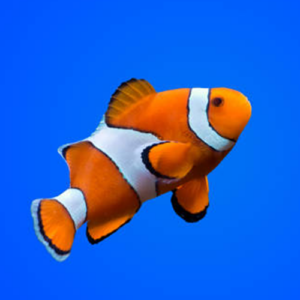
The Indonesian Saddleback Anemonefish (Amphiprion polymnus), also called the Saddleback Clownfish, is a striking, robust, and moderately territorial marine fish recognized by its elongated oval body and incomplete white mid-body “saddle” stripe. Reaching up to 13 cm, it has a distinct ecological twist compared to most reef-dwelling clownfish because it natively inhabits silty lagoons and sandy seagrass beds.
- Size: Typically grows to 13cm.
- Lifespan: Often 10+ years in well-maintained home aquariums.
- Temperament: Semi-aggressive and territorial around its chosen host anemone or territory, though generally peaceful toward unrelated open-water swimmers.
- Origin: Widely distributed across the Indo-West Pacific and Coral Triangle, including Indonesia, the Philippines, New Guinea, northern Australia, Thailand, and the Ryukyu Islands
Care Requirements
- Tank Size: Minimum of 100 liters. They can swim long distances and need space to establish a territory.
- Environment: Provide an open sandy substrate alongside live rock caves and overhangs. In the wild, A. polymnus hovers slightly higher above the sand than typical reef clownfish, so open swimming space is appreciated.
- Water Parameters:
- Temperature: 24–27°C
- Salinity: 1.020–1.025 SG
- pH: 8.1–8.4
Maintenance
- Water Changes: Perform a 10–20% water change every 1–2 weeks to keep nitrates low.
- Filtration: Standard biological/mechanical filtration with a protein skimmer is recommended for a stable reef environment.
Diet
In nature, A. polymnus has a broad omnivorous diet consisting of mid-water zooplankton, benthic crustaceans, and marine algae.
- Food Types: A high-quality diet should include a mix of marine flakes/pellets, frozen mysis shrimp, brine shrimp, and occasional vegetable matter (like dried seaweed or spirulina).
- Feeding Schedule: Feed 1–2 times per day. Only provide what they can consume in 1–2 minutes to avoid water quality issues.
Behavior and Compatibility
- Anemone Symbiosis. In the wild, A. polymnus associates primarily with the Haddon’s Carpet Anemone (Stichodactyla haddoni) and the Sebae Anemone (Heteractis crispa), both of which live in sand beds. Interestingly, because these anemones quickly retract deep into the sand when startled, Saddleback Clownfish evolved to be stronger, faster open-water swimmers than most other clownfish. In aquariums without anemones, they readily adapt to soft corals, Euphyllia, or rockwork.
- Social Hierarchy. They are protandrous hermaphrodites. All juveniles start as gender-neutral or male, with the largest individual permanently transitioning into the dominant breeding female.
- Tankmates. Best housed with robust, semi-aggressive community fish such as tangs, dwarf angelfish, wrasses, hawkfish, and sturdy blennies or gobies. Avoid timid species like firefish or seahorses in smaller tanks.
Reproduction
- Sexing: They are sequential hermaphrodites. The dominant fish will become female, while the submissive one remains male.
- Spawning: Pairs will often clean a flat rock surface near their host and lay eggs. In a community tank, the eggs are often eaten by other fish, so specialized breeding setups are required if you intend to raise the fry.
Tips
- Captive-Bred is Best: Always try to purchase captive-bred specimens. They are much hardier, more accustomed to aquarium foods, and free from the environmental impact of wild collection.
- Quarantine: While hardy, they are susceptible to Brooklynella (Clownfish Disease) and Marine Ich. Quarantining new additions is always the safest practice.
- Don’t Rush the Anemone: If you want an anemone, wait until your tank is at least 6–12 months old and very stable. Anemones are much more sensitive than the clownfish themselves
Picture for illustrative purposes only. Either come in store to view available stock or request pictures to be sent to you.
Please Note: Due to variations within species resulting from age, region, sex, etc., the actual livestock may not look identical to the image. Approximate size range may also vary between individual specimens.