Description
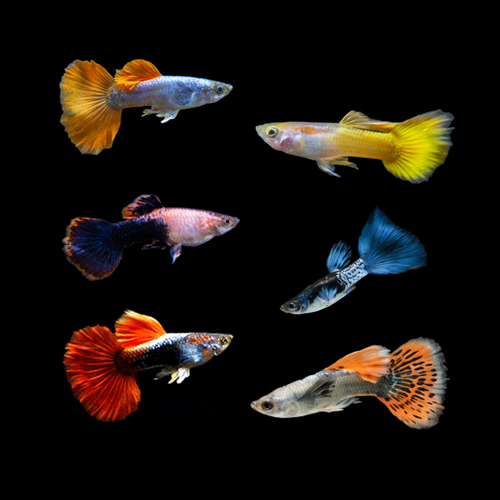
Assorted Male Guppy (Poecilia reticulata)
Overview
Poecilia reticulata, commonly known as the guppy or millionfish, is a small, vibrant freshwater fish from the Poeciliidae family, native to northeastern South America, including Venezuela, Guyana, Barbados, and Trinidad. Widely introduced globally due to mosquito control, it’s one of the most popular aquarium fish. Males, reaching 3.5–5 cm, display dazzling colours and fan-shaped tails, while females, up to 6 cm, are duller gray or green. Their hardy, peaceful nature and prolific breeding make them ideal for beginners, though selective breeding has produced numerous fancy strains (e.g., cobra, mosaic).
Care Requirements
Tank Size:
Minimum 40L for a small group (5–10); 75L or larger recommended for larger groups or community setups.
Water Parameters:
- Temperature: 22–28°C; optimal 24–26°C for breeding.
- pH: 6.8–8.5 (neutral to alkaline).
- Hardness: 8–30 dGH (moderately hard to hard, TDS 150–400 ppm).
- Ammonia/Nitrite: 0 ppm.
- Nitrate: <50 ppm (ideally <20 ppm).
- Substrate: Fine gravel or sand; any substrate works, but darker colours enhance male vibrancy.
- Décor: Dense plants (e.g., Java moss, hornwort, Anubias) and floating plants (e.g., water lettuce) for cover, especially for fry. Include rocks or driftwood for aesthetics.
- Filtration: Gentle to moderate flow using sponge or hang-on-back filters; ensure good water movement without strong currents.
- Lighting: Moderate; floating plants provide shade for comfort.
- Other: Secure lid recommended, as guppies may jump, especially during feeding.
Maintenance
- Water Changes: 20–30% weekly with dechlorinated water to maintain stable parameters and low nitrates.
- Tank Cleaning: Siphon uneaten food and debris; lightly vacuum substrate to preserve beneficial bacteria.
- Testing: Weekly checks for pH, hardness, ammonia, nitrite, and nitrate using a reliable test kit.
- Equipment Check: Ensure filters function properly, heaters maintain stable temperatures, and lid is secure.
Diet
- Type: Omnivorous; feeds on algae, small invertebrates, and plant matter in the wild.
- Foods:
- Dry: High-quality flakes or micro-pellets (e.g., TetraMin, Fluval Bug Bites).
- Live/Frozen: Brine shrimp, daphnia, bloodworms, mosquito larvae (2–3 times weekly for colour enhancement).
- Occasional: Blanched vegetables (e.g., spinach, zucchini) or spirulina flakes for variety.
- Feeding: Small portions 2–3 times daily, consumed within 1–2 minutes to prevent overfeeding.
- Notes: Varied diet enhances colouration and health. Overfeeding can lead to obesity and water quality issues.
Behaviour and Compatibility
- Temperament: Peaceful and active; males may chase females persistently but are harmless.
- Social Behaviour: Thrive in groups with a ratio of 1 male to 2–3 females to reduce female stress from male attention. Solitary males may become shy.
- Compatible Tankmates:
- Small, peaceful fish: Neon tetras, platies, mollies, corydoras catfish, kuhli loaches.
- Bottom-dwellers: Otocinclus, bristlenose plecos.
- Incompatible: Aggressive or fin-nipping fish (e.g., tiger barbs, serpae tetras), large predators (e.g., cichlids), or species requiring vastly different water parameters.
- Notes: Dense plants provide refuge for harassed females and fry. Guppies are active swimmers, preferring mid-to-upper tank levels.
Breeding Behaviour
Breeding Type: Livebearers; females give birth to live fry after internal fertilization.