Description
Two-Bar Rabbitfish (Siganus virgatus)
Overview
The Virgate Rabbitfish (Siganus virgatus), also known as the Two-Barred Rabbitfish or Barhead Spinefoot, is a peaceful and highly effective algae-grazing fish popular in marine reef aquariums.
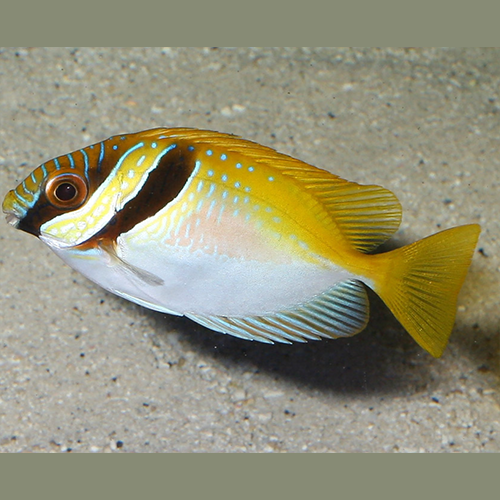
- Appearance: Features an elongated, pearlescent gray-to-white body with bright yellow highlights. It is easily identified by two distinct dark diagonal bands: one crossing the eye and another from the dorsal spines to the pectoral fin base.
- Size: Can reach up to 30 cm in length, though 8 inches is more common in home aquariums.
- Lifespan: Can live up to 12 years with proper care.
- Important Safety Note: Like all rabbitfish, Siganus virgatus possesses venomous spines on its dorsal, anal, and pelvic fins. These are for defense; always exercise extreme caution when handling or netting.
Care Requirements
- Tank Size: A minimum of 300-400 litres is required to provide adequate swimming space.
- Aquascaping: Provide plenty of live rock with caves and overhangs for the fish to hide and sleep at night. They are known to wedge themselves into crevices, so ensure rock structures are stable.
- Water Parameters:
- Temperature: 23–27°C.
- Salinity: 1.020–1.025 SG.
- pH: 8.1–8.4.
Maintenance
Consistent maintenance ensures health and vibrant coloration while minimizing disease risk.
- Water Changes: 10-20% weekly (30-60 liters for a 300-liter tank) using RO/DI water matched to tank parameters.
- Filtration: Employ a protein skimmer, canister filter, or refugium. Add activated carbon to remove toxins.
Testing: Weekly monitoring of pH, salinity, ammonia, nitrite, nitrate, and phosphate using reliable kits (e.g., Salifert, Hanna). - Cleaning: Siphon detritus during water changes; clean filters monthly. Monitor algae growth, as the Foxface grazes but requires supplemental feeding.
- Handling: Use caution due to venomous dorsal, anal, and pelvic spines. Transfer using a container, not a net, to avoid stings. If stung, soak the area in hot water (45°C) for 30-90 minutes to denature the venom.
- Acclimatization: They may be shy during the first week; ensure they have plenty of hiding spots and low-traffic surroundings.
Diet
Primarily an herbivore, this fish is a powerhouse for controlling nuisance algae, including bubble algae.
- Staple Diet: Marine algae sheets (nori) should be available on a clip daily. Provide high-quality herbivore pellets and frozen spirulina-based foods.
- Supplements: Occasional offerings of blanched spinach or romaine lettuce are appreciated.
- Meaty Foods: While they will eat mysis or brine shrimp, these should be kept as occasional treats rather than a primary food source.
- Feeding Frequency: Feed 2–3 times daily. If they are not well-fed, they may begin to nip at corals.
Behavior and Compatibility
- Temperament: Generally peaceful and non-territorial. They are often less shy than their relatives (like the Foxface Rabbitfish).
- Compatibility: Safe with most community reef fish, including smaller species. They are generally ignored by aggressive fish due to their venomous spines.
- Interspecies Aggression: Do not keep more than one Siganus species per aquarium unless you have a mated pair and a very large system, as they can be territorial toward other rabbitfish.
- Reef Safety: “Reef safe with caution.” If underfed, they may occasionally nip at soft corals or large-polyp stony corals (LPS).
Reproduction
Breeding has not been successfully reported in home aquariums.
Tips
- Handling: Never use bare hands. Use two nets or a specimen container to move them; if they become stressed, they may display a “fright pattern” (blotchy colors).
- If Stung: The venom is heat-labile. If you are stung, soak the area in hot water (110–115°F) to denature the toxin and seek medical attention if pain persists or if you have an allergic reaction.
Picture for illustrative purposes only. Either come in store to view available stock or request pictures to be sent to you.
Please Note: Due to variations within species resulting from age, region, sex, etc., the actual livestock may not look identical to the image. Approximate size range may also vary between individual specimens.


