Description
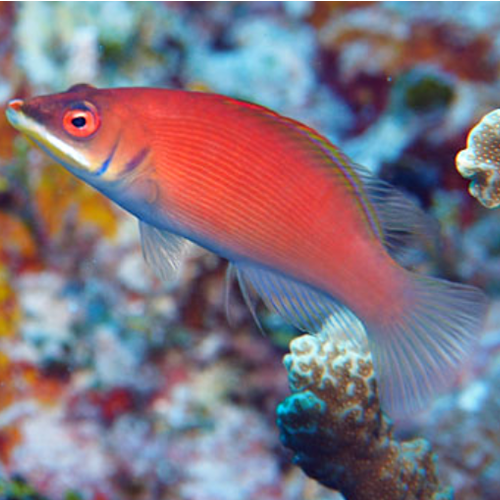
Striated Wrasse (Pseudocheilinus evanidus)
Overview
The Pseudocheilinus evanidus, commonly known as the Striated Wrasse or Disappearing Wrasse, is a small, vibrant, and fascinating member of the Wrasse family. While less commonly seen than its famous cousin, the Six-Line Wrasse (P. hexataenia), it is highly valued for its striking coloration and utility as a pest-control fish.
- Temperament: Semi-aggressive; can be quite feisty for its small size.
- Size: Grows to approximately 6–8 cm.
- Key Trait: Known as the “Disappearing” Wrasse because of its habit of quickly darting into rock crevices or burying itself in the sand when startled or at night.
- Behavior: Highly active, constantly hunting for small crustaceans and pyramidellid snails among the rockwork.
Care Requirements
- Tank Size: Minimum 120 litres. Because they are active hunters, they need plenty of rockwork to patrol.
- Environment: A tank with a significant amount of live rock is mandatory. This provides both the natural food source (copepods/amphipods) and the essential hiding spots the fish needs to feel secure. A sand bed is also beneficial, as some individuals may choose to sleep in the sand.
- Lid: Like all wrasses, they are prone to jumping. A tight-fitting, secure lid is essential.
- Water Parameters:
- Temperature: 22–26°C.
- Salinity: 1.020–1.025 SG.
- pH: 8.1–8.4.
Maintenance
- Water Quality: Maintain standard reef parameters. They are hardy but thrive best in a mature, stable aquarium.
- Routine: Regular 10–20% water changes are recommended.
- Flow: They appreciate moderate water flow to help circulate natural food sources around the rocks.
Diet
- Type: Carnivore.
- Staples: Primarily a predator of small invertebrates. In the aquarium, they should be offered high-quality frozen Mysis shrimp, brine shrimp, and chopped seafood. They will also spend much of the day hunting copepods and amphipods on the live rock.
- Training: Most individuals will readily accept high-quality prepared pellets or flakes, but frozen food is essential to keep them in top condition.
Behavior and Compatibility
- Tankmates: Best kept with peaceful to semi-aggressive fish that are larger than them.
- Avoid: Do not house with very small, timid fish (like nano-gobies) or other Pseudocheilinus species, as they can become territorial and aggressive toward fish of similar size or shape.
- Reef Safety: Generally reef-safe, but like other members of the genus, they are opportunistic hunters. They will consume small ornamental crustaceans, such as tiny shrimp or crabs, and are excellent at controlling populations of parasitic snails.
Reproduction
They are protogynous hermaphrodites, but successful reproduction in a home aquarium is undocumented and extremely unlikely.
Tips
- Pest Control: They are excellent at cleaning up pyramidellid snails, which are often pests on Tridacna clams.
- Acclimation: They can be shy for the first few days after introduction. Provide plenty of rocks and avoid aggressive tankmates during this period.
- Feeding: Ensure your tank has a well-established population of micro-fauna, or be prepared to feed them multiple times a day until they are fully adjusted to prepared foods.
Picture for illustrative purposes only. Either come in store to view available stock or request pictures to be sent to you.
Please Note: Due to variations within species resulting from age, region, sex, etc., the actual livestock may not look identical to the image. Approximate size range may also vary between individual specimens.