Description
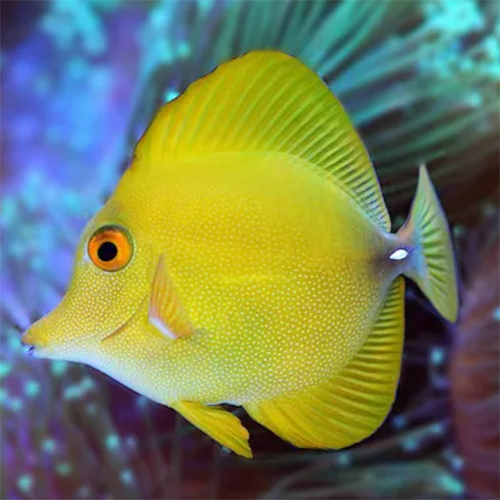
Yellow Scopas Tang (Zebrasoma scopas)
Overview
The Yellow Scopas Tang (Zebrasoma scopas), is a yellow variant to the often called the Brown or Brush-tail Tang. They are a highly active and effective algae grazer that is a favorite for many reef keepers. While its common name sometimes leads to confusion with the “Yellow Tang” (Zebrasoma flavescens), the Scopas is a distinct, hardy, and fascinating species in its own right.
- Appearance: Its body shape is the classic “high-fin” diamond typical of the Zebrasoma genus. The colouration is generally a mottled brown, tan, or olive, often featuring subtle horizontal lines or spots. Some individuals can display beautiful variations in colour intensity, sometimes appearing with yellow or golden undertones.
- Size: Grows to approximately 20 cm.
- Lifespan: Can live 10+ years with proper care.
- Defensive Spine: Like all surgeonfish, it possesses a sharp, retractable caudal spine (scalpel) at the base of its tail. Handle with care during transport to avoid injury to yourself and the fish
Care Requirements
- Tank Size: A minimum of 300-400 litres is required, though 400+ litress is strongly recommended to provide the horizontal swimming space these active fish require.
- Aquascaping: They thrive in environments with ample live rock that provides caves for sleeping and plenty of surface area for natural algae growth, which they spend most of their day “grazing” upon.
- Water Parameters:
- Temperature: 23–27°C.
- Salinity: 1.020–1.025 SG.
- pH: 8.1–8.4.
Maintenance
Because they are high-metabolism grazers, they produce significant waste. Maintain robust filtration and perform regular, consistent water changes to keep nutrient levels (nitrates/phosphates) in check.
Diet
- Primary Diet: They are dedicated herbivores. Nori (dried seaweed sheets) should be available on a clip for most of the day to mimic their natural grazing habits.
- Varied Nutrition: Supplement their diet with high-quality herbivore pellets, frozen spirulina-based formulas, and occasionally mysis or brine shrimp for protein. A diverse diet is the best way to prevent Lateral Line Erosion.
Behavior and Compatibility
- Temperament: Semi-aggressive. They can be territorial, particularly toward other tangs or fish with a similar body shape.
- Compatibility: It is generally best to introduce them as one of the last additions to an established tank. If you plan to keep multiple tangs, ensure the tank is large enough to allow for distinct territories.
- Reef Safety: Generally considered reef-safe. They are excellent at controlling nuisance algae, including hair algae. They typically ignore corals unless they are underfed or malnourished, in which case they may occasionally sample coral mucus.
Reproduction
The Scopas Tang (Zebrasoma scopas) has not been successfully bred in home aquariums, and large-scale commercial captive breeding remains extremely rare and difficult.
Tips
- Quarantine: Like all tangs, the Scopas is susceptible to Cryptocaryon (Marine Ich). Always quarantine new specimens to ensure they are healthy before adding them to your display tank.
- Algae Clip: Using a veggie clip is essential. It keeps them occupied, reduces stress, and prevents them from looking for food elsewhere (like your corals).
- Colouration: If the fish appears dull, ensure your lighting is sufficient and that you are providing a varied diet with quality vitamins.
Picture for illustrative purposes only. Either come in store to view available stock or request pictures to be sent to you.
Please Note: Due to variations within species resulting from age, region, sex, etc., the actual livestock may not look identical to the image. Approximate size range may also vary between individual specimens.