Description
Percula Clown Anemonefish (Amphiprion percula)
Overview
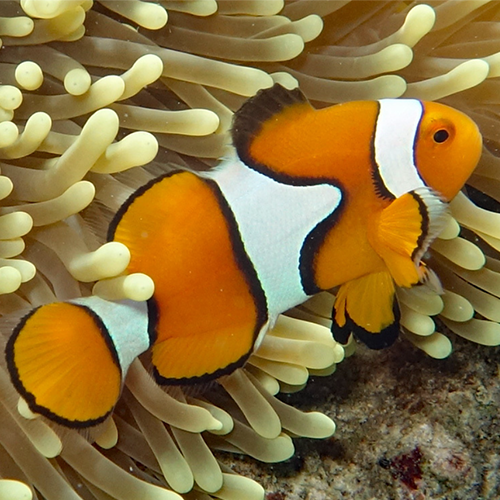
The Amphiprion percula, commonly known as the Orange Clownfish or Percula Clownfish, is arguably the most recognizable fish in the marine hobby. Iconic due to its appearance in popular culture, it is a hardy, personable, and rewarding fish for both beginners and experienced aquarists.
- Temperament: Semi-aggressive; they can become territorial, especially toward others of their own kind as they mature.
- Size: Grows to approximately 7–10 cm.
- Key Trait: Known for their symbiotic relationship with host anemones in the wild, though they readily thrive in captivity without one.
- Hardiness: Extremely hardy; captive-bred specimens are widely available and often adapt faster to aquarium life than wild-caught individuals.
Care Requirements
- Tank Size: Minimum 80 litres. They do not require a massive amount of swimming space, making them suitable for smaller reef setups.
- Environment: While they do not strictly require an anemone, providing one (such as Heteractis magnifica or Stichodactyla gigantea) can encourage their natural hosting behavior. Ensure the tank has live rock with areas where they can claim a territory.
- Water Parameters:
- Temperature: 22–27°C.
- Salinity: 1.020–1.025 SG.
- pH: 8.1–8.4.
Maintenance
- Water Quality: Maintain standard reef parameters. They are very tolerant of minor fluctuations, but optimal health requires low nitrates (<20 ppm).
- Routine: Regular 10–20% water changes biweekly or monthly.
- Equipment: Standard filtration is sufficient. They do not require high-intensity water flow.
Diet
- Type: Omnivore.
- Staples: Very unfussy eaters. Readily accept high-quality marine flakes, pellets, frozen Mysis shrimp, brine shrimp, and chopped seafood.
- Feeding Habits: They are aggressive eaters and will often come to the surface when they see you, showing high “personality” and interaction.
Behavior and Compatibility
- Social: Best kept singly or in a mated pair. Introducing multiple clownfish into a small tank can lead to intense fighting.
- Tankmates: Compatible with most peaceful to semi-aggressive fish. Avoid keeping them with very aggressive species that might bully them, or tiny, extremely shy fish that they may dominate.
- Reef Safety: Completely reef-safe. They will not bother corals, though an overly enthusiastic host anemone may occasionally “sting” nearby corals if placed too closely.
Reproduction
- They are protandrous hermaphrodites (all are born male, and the dominant individual in a pair will turn into a female).
- Spawning is very common in home aquaria. The pair will clean a flat surface (often a rock near their host) and lay eggs, which the male then guards and aerates until hatching.
- Rearing the fry is a popular project for hobbyists but requires a dedicated larval tank, rotifers, and significant time investment.
Tips
- Captive-Bred Advantage: Always opt for captive-bred A. percula. They are usually more disease-resistant, accustomed to prepared foods, and contribute to sustainable hobby practices.
- Host Behavior: Do not be concerned if your clownfish ignores a host anemone; they are perfectly healthy and happy without one.
- Territoriality: Be aware that a breeding pair can become very protective of their chosen corner of the tank and may nip at your hand during tank maintenance.
Picture for illustrative purposes only. Either come in store to view available stock or request pictures to be sent to you.
Please Note: Due to variations within species resulting from age, region, sex, etc., the actual livestock may not look identical to the image. Approximate size range may also vary between individual specimens.